
Case Study ‘S’
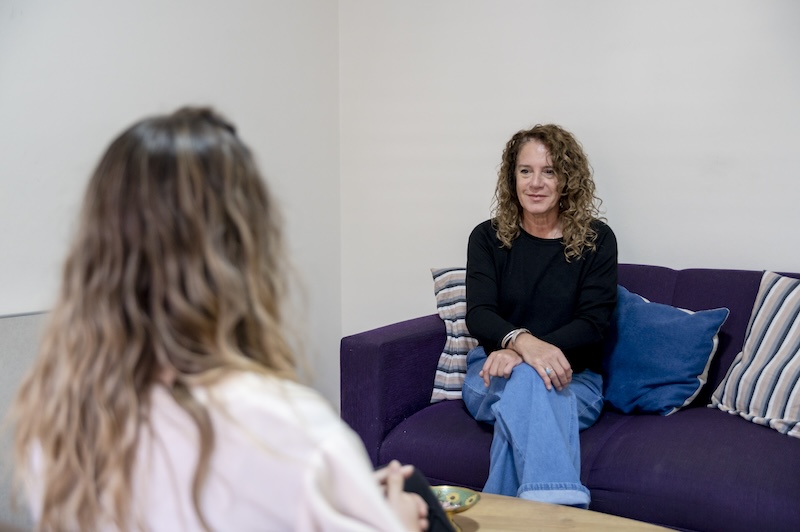
S was referred through to one of the groups by the Social Prescribing team. Upon meeting S, it became obvious from the start that she was really struggling with her anxiety. She explained to me that she had had a recent breakdown which resulted in her being an informal patient on a psychiatric unit which had added to her increased state of anxiety and traumatised her. At the time she lived with her son, who has since gone into the army and she now lives alone which has had an effect on her mental health.
During S first attendance at the group, she was extremely upset and anxious and didn’t really engage with other participants. She was still in a state of crisis at this point and couldn’t concentrate on anything and even expressed suicidal thoughts.
While S initially exhibited significant anxiety and withdrawal, her participation in the groups has gradually increased. She attends regularly and has started to actively engage in discussions and exercises.
Her increased engagement is evident in her willingness to share her experiences, participate in activities, and offer support to others.
S progress in the group is most evident in her growing openness with other members. For example, last night, she shared a personal story that she had never shared before, which led to a heartful conversation and connection with other members of the group.
S willingness to be more open has contributed to a sense of camaraderie and support within the group.
S has taken the initiative to connect with other group members outside the scheduled sessions. She has started going for walks with a few other individuals which is a significant step towards building social connections beyond the group setting.
These newly formed friendships provide S with a much- needed sense of belonging and support outside the group, which is crucial for her overall well-being.
S has repeatedly expressed that the groups have been a lifeline for her. She has stated that she has no family, other than her son who has now left home to go
into the army. She attempted to go back to work recently but had to go off again due to difficulties concentrating and controlling her emotional state. The groups have become a place where she feels understood, supported and valued and are contributing to have a positive impact on her mental health.
Despite her progress, S still experiences significant anxiety and worry. At the encouragement of myself, she is currently waiting to see a psychiatrist for a review, which will hopefully provide her with additional support and strategies to manage her anxiety.
As S continues to engage in the groups and well-being walks and builds new social connections, we will continue to support her by providing a safe and supportive space for her to share her feelings and anxieties; Encourage her to practice confidence-building and self-esteem exercises; support her throughout the psychiatric review, offering a listening ear and guidance and even attend the appointment with her.
We will also explore opportunities to connect S with other community resources and services that can provide additional support, such as mental health counselling (We have arranged for S to have a consultation with a psychotherapist) or other alternative methods.
